#image_title
 0
0
 0
0
The Mountain West Conference has been reshaped by departures to the rebuilt Pac-12 and a wave of strategic additions, transforming its footprint, legal landscape, and long-term identity in FBS football and basketball.
The New Realignment Reality for Mountain West Fans
Five legacy powers—Boise State, Fresno State, San Diego State, Colorado State, and Utah State—are scheduled to leave the Mountain West for the reconstituted Pac-12, with their moves set for summer 2026. Those exits strip the league of several of its biggest football brands and key media-market anchors, forcing the conference to pivot quickly on both membership and media strategy.
At the same time, the Mountain West has responded by adding programs like UTEP and Northern Illinois, along with football-only and Olympic-sport newcomers, to stabilize its numbers and reassert itself as a top-tier Group of Five league. The league office has framed these moves as part of a broader, long-term plan rather than a short-term scramble, emphasizing continuity and competitive balance through at least 2032.
Foundational Members, Grant of Rights, and Legal Fights
Commissioner Gloria Nevarez secured a grant of rights from seven “foundational” Mountain West institutions, locking in their media rights to the league from July 1, 2026, through June 30, 2032. That grant of rights is the backbone of the conference’s stability pitch, signaling to media partners that its core membership will not fracture again during the next media cycle.
Realignment has come with legal drama, especially in the conference’s relationship with the revived Pac-12. The Pac-12 has challenged the Mountain West’s “poaching penalty” language tied to their earlier football scheduling agreement, a dispute that now covers more than 50 million dollars in contested poaching and exit-related sums. At the same time, the Mountain West is aggressively defending its exit-fee bylaws against its own departing members, arguing those schools helped craft the rules they are now trying to avoid paying.
Departures, Additions, and the New Map of the Mountain West
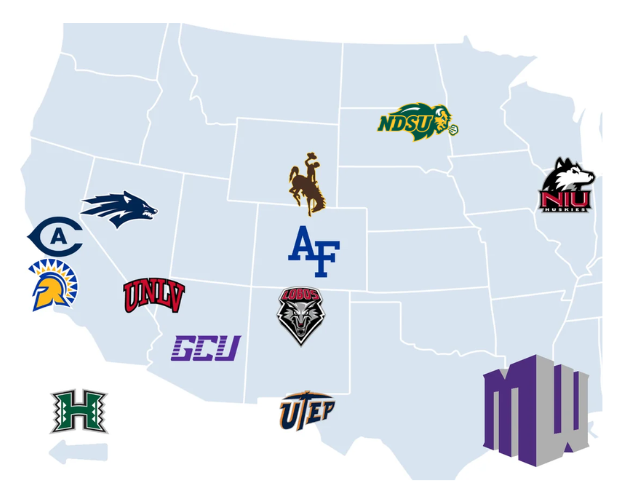
Realignment has effectively split the Mountain West into two storylines: who is leaving, and who is coming in.
- Departing to the Pac-12: Boise State, San Diego State, Fresno State, Colorado State, and Utah State.
- New or recent additions:
- UTEP, moving from Conference USA into the Mountain West, seeking a better competitive platform and revenue upside.
- Northern Illinois, leaving the MAC for the Mountain West in another revenue- and visibility-driven move.
- Football-only and affiliate members like North Dakota State, which joins as a football affiliate and is widely expected to contend near the top of the league from day one.
These moves extend the Mountain West’s geographic reach from the Southwest and Mountain regions deeper into the Midwest and border areas, at the cost of losing some of its longest-standing Western brands. The tradeoff is a league that is less regionally tidy but potentially deeper across multiple time zones, which matters in TV windows and future College Football Playoff selection debates.
Shifting Membership Snapshot
Media Rights, CFP Access, and Competitive Ceiling
All of this realignment is ultimately about money and access: media dollars, CFP shares, NCAA distributions, and institutional visibility. The Mountain West is already working on its next media rights package, set to begin July 1, 2026, with the promise that its foundational members are locked into the conference for the full term.
On the field, the conference still expects to sit near the top of the Group of Five hierarchy, particularly in football. Boise State’s run to the Group of Five CFP berth in the expanded playoff era showed the ceiling for a Mountain West champion, and league leadership believes the retooled membership can position its champion in that same conversation most years. The addition of a perennial powerhouse like North Dakota State, even as a football-only member, raises the floor and creates a fresh national storyline that can resonate on selection committees and with TV partners.
The legal wrangling with the Pac-12 over poaching penalties and exit fees also has real financial stakes that will ripple through future distributions to remaining and incoming members. A favorable outcome would give the league additional cash to reinvest in scheduling guarantees, marketing, and competitive resources at a time when every Group of Five conference is jockeying for differentiation.
What Realignment Means for the MWC’s Future
Realignment has pushed the Mountain West from a cleanly Western-centric league into a more national, patchwork conference that still sees itself as a top Group of Five player. The departures to the Pac-12 hurt from a brand and tradition standpoint, but the league’s aggressive adds, grant-of-rights strategy, and legal posture suggest it intends not just to survive, but to remain a central player in the sport’s next era.
If the new mix of schools can deliver competitive seasons, CFP access, and compelling late-night TV inventory, the reconfigured Mountain West could trade some of its old identity for a new one: less about regional purity, more about sustained relevance in a rapidly consolidating college football economy.


About the Author