#image_title
 0
0
 0
0
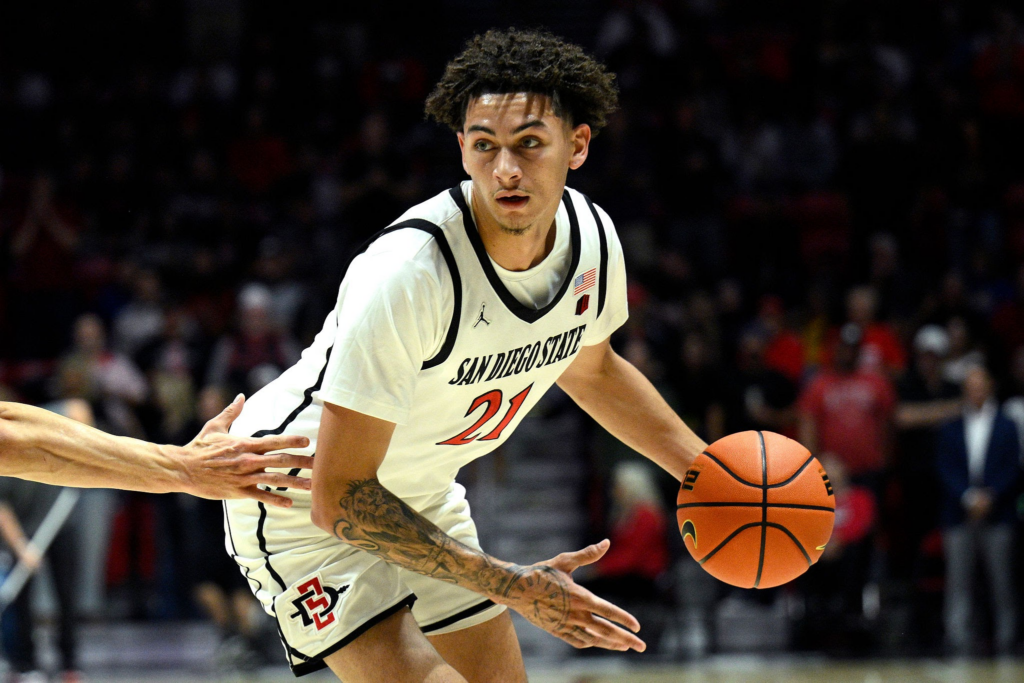
The Decision Miles Byrd Made
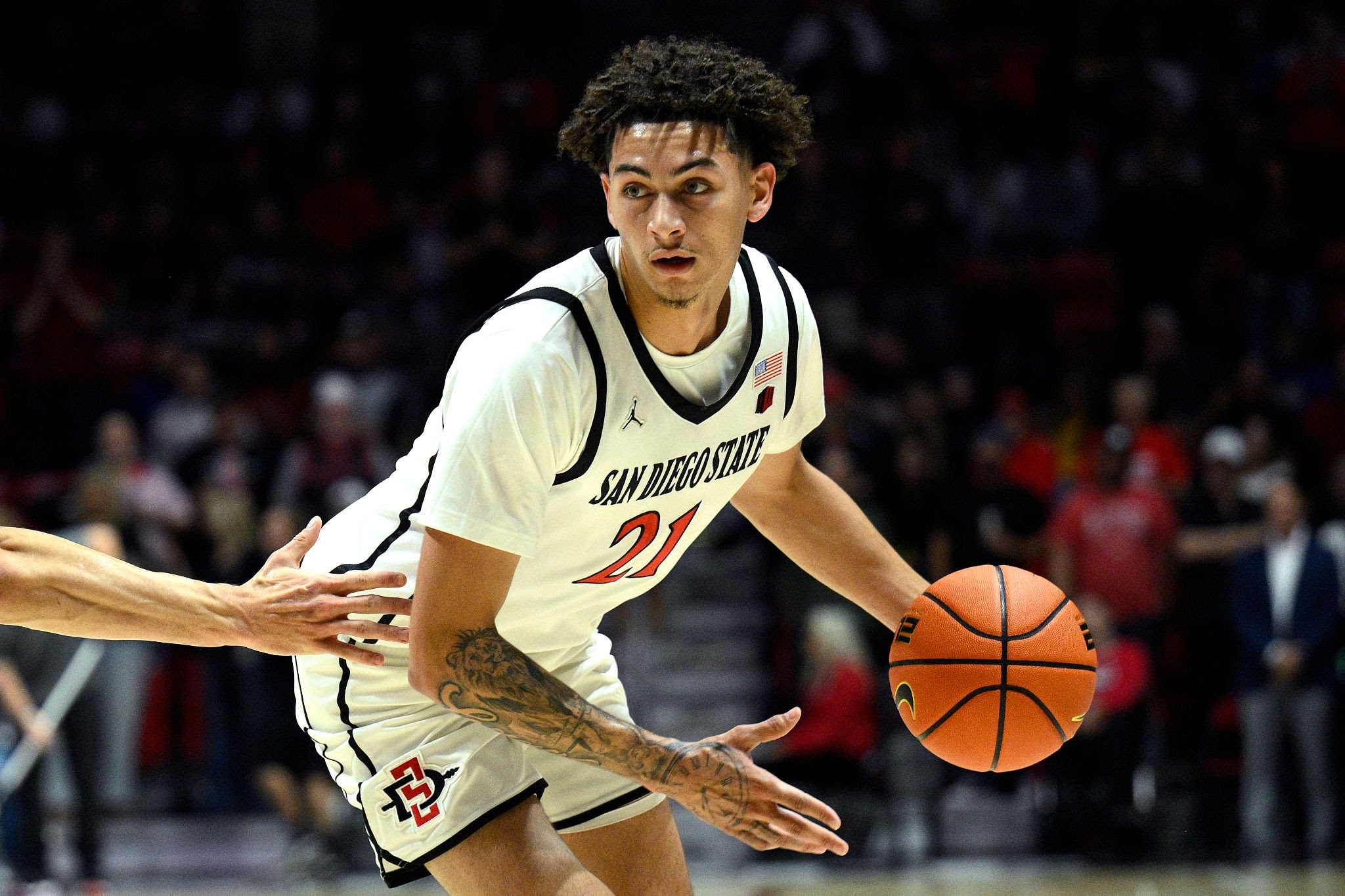
Two months into San Diego State’s season, the bet Miles Byrd made last summer is beginning to look like the kind of quiet gamble that can reshape a career. In June, Miles Byrd could have tested the 2025 NBA draft waters as a long, versatile wing with flashes of playmaking and defense but a résumé that still felt more promise than proof. Instead, Miles Byrd chose the slower route: return to San Diego, take on more responsibility, and try to turn hints of potential into a complete, draftable profile.
From Role Player to Relied-On
Last Season’s Foundation for Miles Byrd
The contrast between who Miles Byrd was last year and who he is now tells most of the story. As a freshman, Miles Byrd was an energy piece, averaging just 4.0 points and 2.5 rebounds in a shade over 14 minutes a night, shooting 38.0% from the floor and 31.1% from deep. His job then was simple: Miles Byrd had to defend, move the ball, knock down the occasional open three, and blend into a veteran rotation that had already proven it could win big games.
Yet the step Miles Byrd took as a sophomore—12.3 points, 4.4 boards, and 2.7 assists in 30.0 minutes while shouldering a double-digit shot diet—came with a new kind of scrutiny. The volume was there for Miles Byrd; the polish was not. He still hovered around 38.1% from the field and 30.1% from three, good enough to keep defenses honest but not convincing enough to quiet every scout’s concern about efficiency.
This Season’s Breakthrough
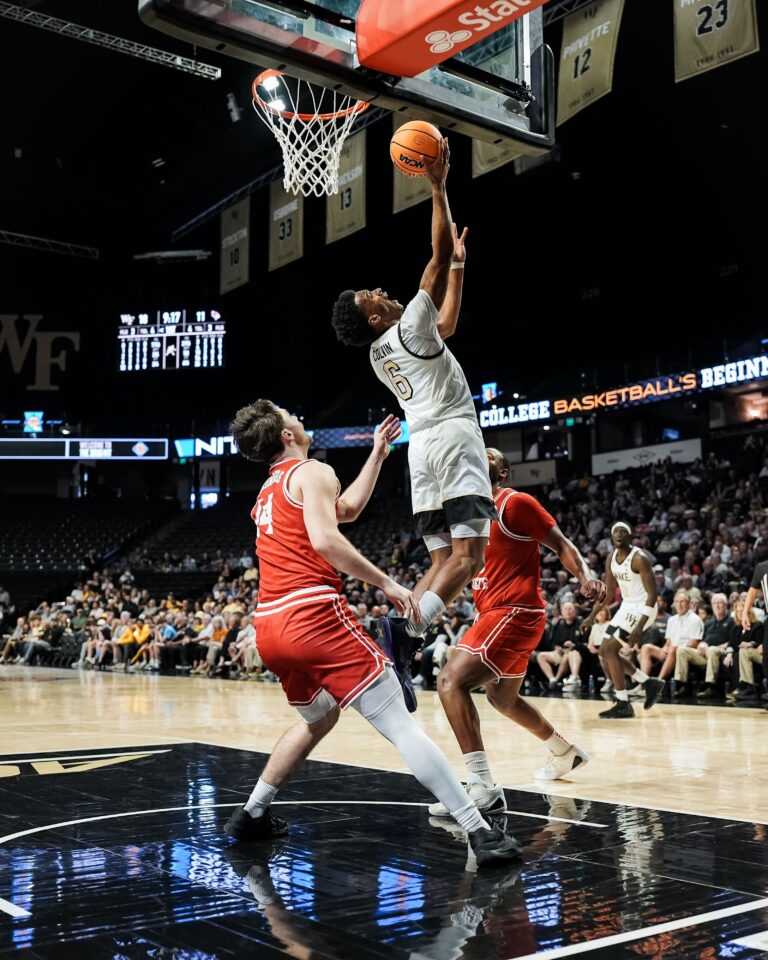
That tension framed Miles Byrd’s summer decision. Enter the draft after a breakout in role, or come back and try to upgrade not just his counting stats, but his credibility as a shooter and decision-maker. The version of Miles Byrd that has emerged early this season suggests he chose correctly. Through roughly two months, Miles Byrd has settled into a junior campaign defined less by raw volume and more by sharpened edges: 10.6 points, 3.4 rebounds, and 3.0 assists in just under 30 minutes, but on 46.3% shooting from the field and a scorching 40.9% from beyond the arc on 4.4 attempts per game. The attempts from deep are not token; they are central to how San Diego State’s offense breathes, the product of a wing—Miles Byrd—who no longer just takes the open shot but demands it within the flow of the offense.
How Miles Byrd Is Proving It Against Real Competition
A Schedule Built to Grow
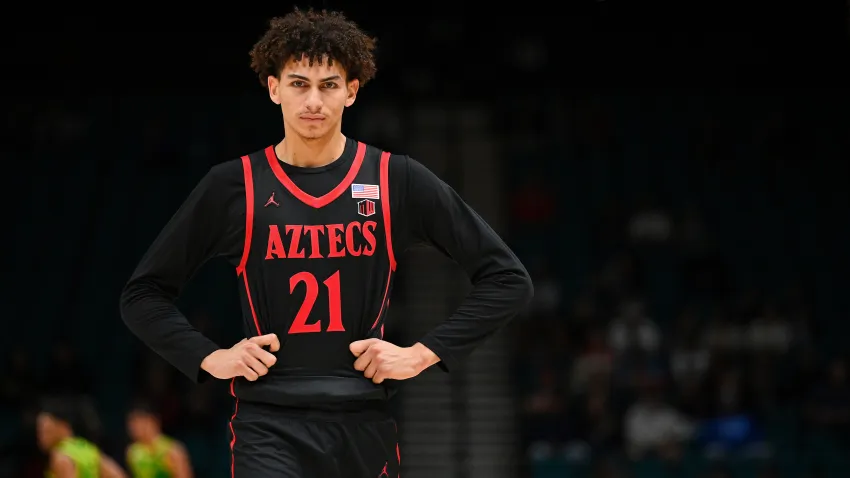
Context matters, too, and Miles Byrd is not padding numbers in the shadows. San Diego State continues to schedule like a program that expects to be measured in March, stacking tough nonconference tests and high-leverage environments that mimic the travel, scouting attention, and physicality of the next level for players like Miles Byrd. As a sophomore, Miles Byrd logged starter minutes in multi-game events, true road contests, and games against power-conference opponents, often drawing primary or secondary defensive attention that forced him to create under pressure rather than simply finish plays others started.
This year, those minutes feel less like auditions and more like obligations for Miles Byrd. He is treated as a central piece of the scouting report, and the early efficiency spike suggests Miles Byrd has learned how to live with that spotlight rather than shrink from it.
Growth and Remaining Flaws
The growth is not linear, and the struggles for Miles Byrd have not disappeared so much as changed shape. His career field-goal percentage still sits under 40% when last year’s heavy, inefficient workload is folded into the equation, a reminder that the beautiful early-season shooting line for Miles Byrd rests on a relatively small sample. Turnovers and fouls—around 2.0 and 2.4 per game, respectively, in these opening months—still place a ceiling on how much on-ball creation Miles Byrd can carry and how aggressively he can hunt steals or contests without risking foul trouble. But the questions surrounding Miles Byrd have evolved. They are no longer about whether he belongs at this level; they are about how much responsibility Miles Byrd can hold while keeping this new, cleaner efficiency intact. That is the kind of question NBA teams prefer to answer with a full season of film rather than a speculative summer workout.
What NBA Teams Will See in Miles Byrd
From Flyer to Priority: Miles Byrd’s Path
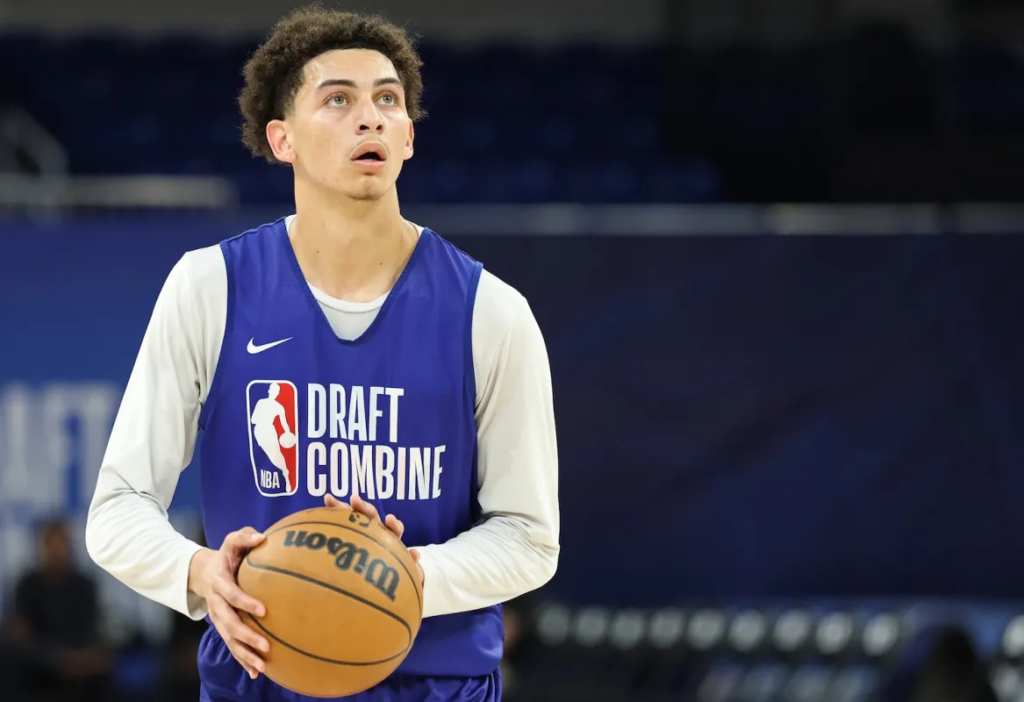
Viewed through that lens, skipping the draft looks less like hesitation and more like calculated patience for Miles Byrd. Had Miles Byrd declared after last season, he likely would have entered the conversation as a long-term flyer: intriguing size, defensive tools, flashes of secondary playmaking, and a three-point shot that was more theoretical than trustworthy. That profile for Miles Byrd tends to slide into the second round at best, or into Exhibit 10s and two-way contracts that offer opportunity but little margin for error.
By returning, Miles Byrd positioned himself to prove that he can combine volume with efficiency on a winning program, a combination front offices routinely pay attention to. If Miles Byrd holds anything close to a 40% mark from deep over the course of the year while maintaining his playmaking and defensive activity, the perception around him can shift from “maybe” to “must-discuss” as a modern two-way wing.
The Gamble by Miles Byrd, Two Months In
So, two months in, the story of Miles Byrd’s decision is not finished, but the early chapters justify his choice. Miles Byrd turned down an early shot at the NBA to bet that time, reps, and a heavier load at San Diego State would reveal a more complete version of himself. The numbers show a player—Miles Byrd—who traded raw opportunity for refined production, who used another year in college not as a delay but as a springboard. If the next few months look anything like the last two, the question in NBA rooms will not be why Miles Byrd waited, but how soon someone is willing to invest in the wing who trusted that his best basketball was still ahead of him.


About the Author