
#image_title
 2
2
 0
0
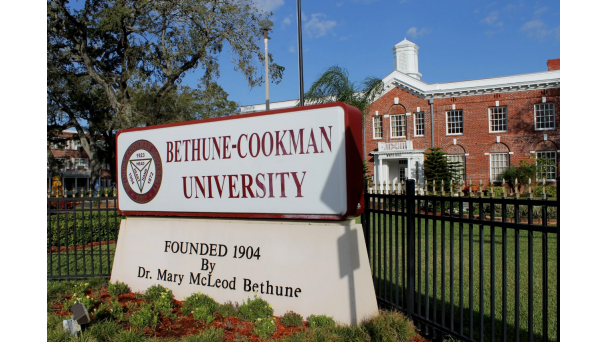
Daytona Beach, Florida, may be known for sun and speed, but for generations of Wildcats, it’s sacred ground. It’s where Dr. Mary McLeod Bethune built an institution of hope from a rented house and $1.50 in 1904. Nearly two decades later, her school merged with Cookman Institute of Jacksonville—the first higher-education institution for Black men in Florida—to form what is now Bethune-Cookman University. From those humble beginnings rose one of the nation’s most influential HBCUs, guided by its timeless motto: “Enter to Learn, Depart to Serve.”
That spirit of service and self-determination remains Bethune-Cookman’s heartbeat. In 2022, that legacy was immortalized when Dr. Bethune’s marble likeness became the first statue of an African American to represent a U.S. state in the Capitol’s National Statuary Hall. For Wildcats everywhere, it was more than recognition—it was validation of a vision that began with education and continues through excellence.
Champions on the Field
Bethune-Cookman’s athletic programs embody the founder’s drive and resilience. The Wildcats compete in the Southwestern Athletic Conference (SWAC) and have wasted no time making their mark since joining in 2021. The baseball team has been one of the university’s most dominant programs, claiming conference tournament titles in 1999–2004, 2006–2011, 2017, and again in 2025, earning multiple NCAA regional berths along the way. The softball program is equally respected, long serving as a standard-bearer for HBCUs at the Division I level after its groundbreaking NCAA regional appearance in 2005.
On the gridiron, football is king. The Wildcats have won seven Mid-Eastern Athletic Conference (MEAC) titles and earned Black College Football National Championships in 2010 and 2013. Under head coach Brian Jenkins, Bethune-Cookman enjoyed one of its most dominant decades, including nationally ranked seasons and marquee victories. The Wildcats’ modern era now belongs to head coach Raymond Woodie Jr., a proud alumnus tasked with restoring that same championship edge.
Then comes November—the Florida Blue Florida Classic—when tens of thousands pack Camping World Stadium in Orlando to watch B-CU face Florida A&M University in one of college football’s greatest rivalries. The game is more than a contest; it’s a cultural pilgrimage. Fans from across the South fill the city for a weekend of pride, music, and pageantry. For Wildcats, a victory over FAMU is a year-long badge of honor.
Leaders, Legends, and Legacy
B-CU’s coaching lineage is rich. Bunky Matthews, the program’s patriarch, led the Wildcats from 1946–1960, laying the foundation for sustained success. His successor, Cy McClairen, elevated the standard again as both head coach and athletic director, becoming one of the most revered figures in Bethune-Cookman athletics. Their influence built a bridge that today’s coaches still walk across.
The university’s impact on professional sports runs deep. Larry Little (Class of 1967) became a Pro Football Hall of Famer and Miami Dolphins legend before returning home to coach his alma mater. Rashean Mathis set an NCAA single-season interceptions record (14) and earned All-Pro honors during a stellar NFL career. Nick Collins, a three-time Pro Bowler, helped the Green Bay Packers capture Super Bowl XLV and later joined the Wildcats’ staff. The school’s baseball program has sent players to the major leagues, including Peter O’Brien, who played for the Arizona Diamondbacks and Miami Marlins.
On the hardwood, Reggie Theus—former NBA All-Star and current athletic director—has brought energy and professionalism to men’s basketball. The program continues to rise through the SWAC ranks, aiming for its first NCAA Tournament berth. Meanwhile, the women’s basketball team captured the 2019 MEAC Tournament title and made its first NCAA Tournament appearance, cementing its place among HBCU elites.
The Pride of Bethune-Cookman
Ask anyone who’s been to a Wildcat game what stands out most, and they’ll tell you: the band.
The Marching Wildcats, known nationwide as “The Pride,” are more than halftime entertainment—they’re a phenomenon. With over 300 members, including the Five Horsemen drum majors, the Sophisticat Flag Corps, and the 14 Karat Gold dancers, The Pride is the university’s sonic soul. They’ve performed on some of the biggest stages imaginable: the Super Bowl XLIII pregame show, the NFL Pro Bowl, and countless national showcases. Their precision and showmanship earned them a starring role in the Netflix docuseries Marching Orders—a behind-the-scenes look at what it takes to be part of one of the most respected marching bands in America.
When The Pride storms into the Battle of the Bands on Florida Classic weekend, the stadium shakes. Every trumpet blast and drum cadence carries the rhythm of generations who built this legacy from nothing but faith and fire. The crowd knows what’s coming—but it still feels electric every single time. The Marching Wildcats don’t just perform; they define what it means to represent an HBCU with passion, precision, and pride.
Beyond the Game: Wildcat Changemakers
While athletics and music may make headlines, Bethune-Cookman’s impact stretches far beyond sports. The university’s alumni roster reads like a tapestry of leadership across education, civil rights, politics, and invention.
- Harry T. Moore, educator and civil-rights pioneer, founded the first NAACP chapter in Brevard County and fought tirelessly for Black voter rights in Florida.
- Yvonne Scarlett-Golden, Class of 1952, became the first African American mayor of Daytona Beach in 2003, forever linking the city’s progress to its hometown university.
- Nathan K. McGill, a B-CU alumnus, became Assistant Attorney General for the State of Illinois—the first African American to hold that position.
- William H. Turner, educator and public servant, served as chair of the Miami-Dade County School Board and later as a Florida state senator.
- Marjorie Joyner, pioneering inventor and businesswoman, helped revolutionize hair-care technology with the creation of the permanent-wave machine.
These names, alongside Hall of Famers and Grammy winners, reflect the breadth of Bethune-Cookman’s influence. Whether leading marches, city councils, or orchestras, B-CU alumni continue to embody Dr. Bethune’s belief in education as the gateway to freedom.
A Legacy That Endures
From the crack of helmets on a fall Saturday to the rolling drums of The Pride, Bethune-Cookman stands as a testament to what vision, courage, and community can build. Dr. Bethune’s Last Will and Testament still echoes through every hallway: “I leave you love. I leave you hope. I leave you the challenge of developing confidence in one another.”
Those words guide every Wildcat who steps onto campus, every alum who represents the school, and every fan who wears maroon and gold with pride. From Daytona’s palm-lined streets to the roar of Orlando’s stadium lights, one truth remains: Wildcat Pride isn’t given—it’s earned.
So whether it’s a defensive stand at the goal line, a saxophone glinting under the lights, or a graduate turning their tassel, each moment is part of the same legacy. This is Bethune-Cookman University—where education meets excellence, and where Wildcats never stop roaring.


About the Author