
#image_title
 2
2
 0
0
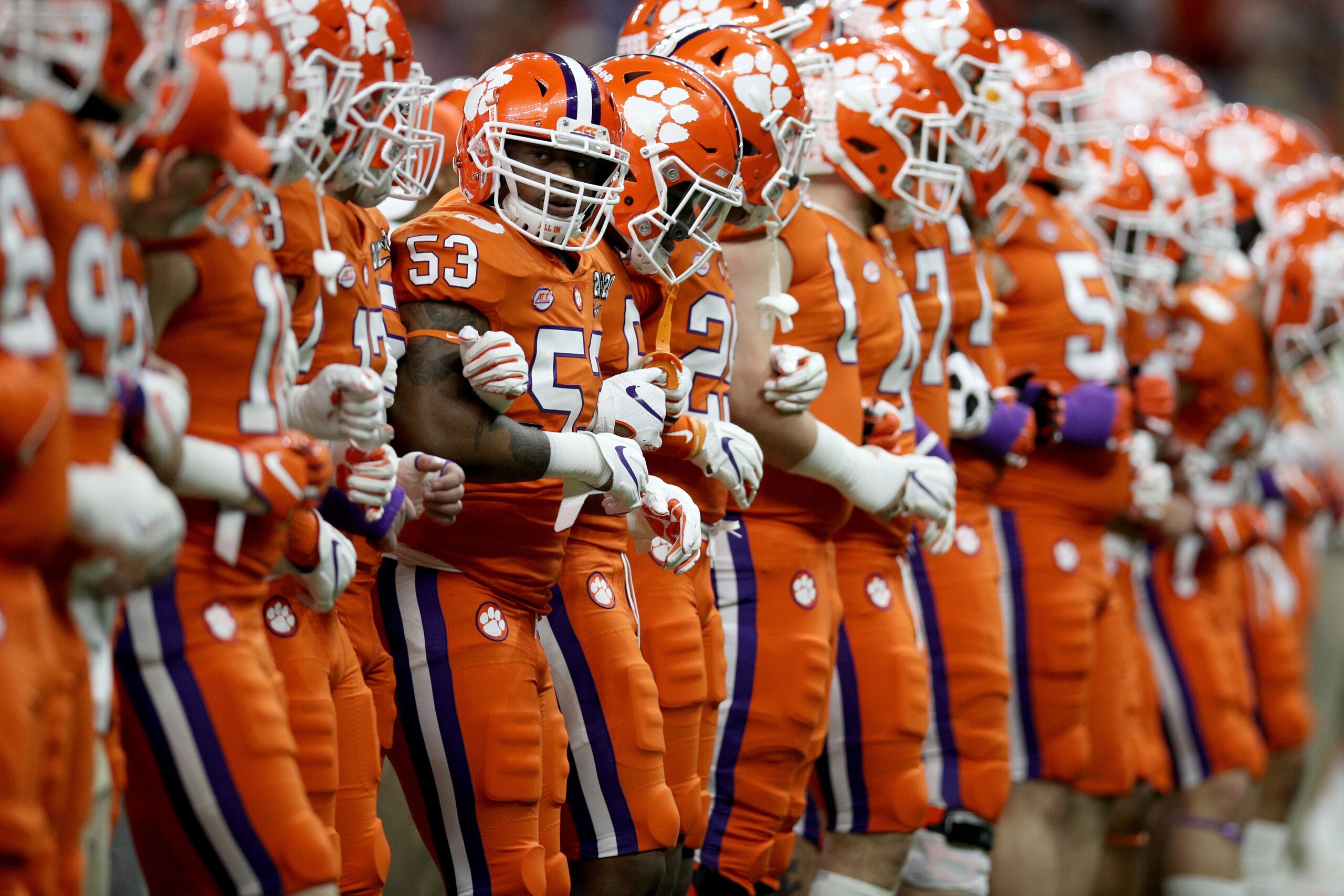
CLEMSON, S.C. — The times are changing in Death Valley, and Dabo Swinney knows it.
As the 2026 NCAA transfer portal window swings open, Clemson finds itself at a crossroads. After a disappointing campaign that ended with a Pinstripe Bowl defeat, the Tigers are dealing with something they haven’t had to face much in the past: significant roster upheaval through the portal.
This isn’t the Clemson we’ve known for the past decade. The program that once built championship rosters almost entirely through high school recruiting is now actively shopping in college football’s most chaotic marketplace. And honestly? They don’t have much choice.
Understanding the Portal: Opportunity Meets Uncertainty
For those who haven’t been paying attention, the NCAA transfer portal has fundamentally changed college football since its launch in 2018. Think of it as free agency for college athletes — a database where players officially declare their intention to explore other schools, opening themselves up to recruitment from programs across the country.
The portal operates on a tight schedule. In 2026, it’s open from Jan. 2 through Jan. 16, giving players just two weeks to make life-changing decisions. Once a player enters, they can commit to a new school whenever they want, though the risk is real — scholarship guarantees disappear, and there’s no guarantee of landing in a better situation.
In today’s college football landscape, where NIL deals reshape recruiting and early NFL entries create roster holes, the portal has become essential. It’s not just about player movement anymore. It’s about survival.
And Clemson is learning that lesson the hard way.
The Exodus: Who’s Leaving Death Valley
The numbers don’t lie. Clemson has experienced one of its most active portal seasons in program history, with departures hitting the defensive side of the ball particularly hard.
Here’s who’s heading for the exit:
Defensive Line Departures:
- Stephiylan Green, Defensive Tackle: A three-year contributor with 34 career tackles is drawing Power Five interest as he seeks a bigger role elsewhere.
- Markus Dixon, Defensive End: The former tight end turned edge rusher has one year of eligibility remaining and is looking for a fresh start.
- Caden Story, Defensive Tackle: After four years of sporadic playing time, Story is betting on himself to find more opportunities.
Linebacker Losses:
- Dee Crayton and Jamal Anderson: Both reserve linebackers with multiple seasons under their belts are seeking starting opportunities.
Secondary Bloodletting:
- Josh Sapp, Tight End: Not a defensive player, but his 273 career receiving yards and four years of experience leave a gap in offensive versatility.
- Shelton Lewis, Cornerback: Limited action in 2025 prompted his portal entry, creating immediate depth concerns.
- Khalil Barnes and Ricardo Jones, Safeties: Two departures that have Clemson fans particularly worried about secondary depth.
- Rob Billings and Michael Manaka: Additional defensive back losses that further thin the roster.
Social media tracking and fan forums suggest roughly a dozen scholarship players have entered the portal, with the defensive backfield and defensive line taking the biggest hits. For a program that’s prided itself on development and player retention, this represents a significant cultural shift.
The volume of exits marks a turning point. Clemson isn’t just losing players — they’re losing depth, experience and the kind of veterans who understand what it means to wear orange and purple.
The Reinforcements: Portal Additions Provide Hope from Previous Year
But it’s not all doom and gloom in Clemson. Swinney and his staff have already made moves to address the bleeding, landing a couple of impact transfers who could immediately upgrade the roster.
Jeremiah Alexander, Linebacker: This is the big one. Alexander committed to Clemson after three seasons at Alabama, where he was a former five-star recruit. He brings SEC starting experience, athleticism and the kind of pedigree that fits perfectly with what Clemson needs in the front seven. This is the type of portal win that can change a defense.
Will Heldt, Defensive Lineman: Committed on Dec. 19 after a productive stint at Purdue, where he racked up 56 tackles, 10 tackles for loss and five sacks. His edge-rushing ability addresses one of Clemson’s most glaring needs. Heldt is the kind of proven pass rusher who can make life easier for everyone else on the defensive line.
These additions represent a departure from Clemson’s historical approach. For years, Swinney’s staff rarely used the portal to add players, preferring to develop high school recruits through the program’s system. But the modern college football landscape has forced adaptation, and Clemson is finally embracing what other programs figured out years ago: the portal is here to stay.
The Tigers have also held meetings with potential safety Lyrik Rawls from Kansas, showing they’re willing to cast a wide net to find immediate help at positions of need.
Swinney’s Evolving Philosophy: Tradition Meets Reality
Dabo Swinney built a national championship program on a simple philosophy: recruit high school kids, develop them into college stars, and win with culture and continuity. For years, it worked brilliantly.
But after a rough season that exposed depth issues and roster gaps, Swinney is adjusting his approach without abandoning his core principles.
“We got to see how it all shakes out,” Swinney said regarding the team’s portal plans, acknowledging that needs can shift quickly based on departures or gaps at critical positions.
Defensive coordinator Tom Allen has been equally pragmatic about the situation. After significant offseason losses, the portal represents the quickest path to replenishing defensive talent and depth. It’s not ideal, but it’s necessary.
Clemson faces a two-pronged challenge heading into 2026:
Replace key contributors lost to the portal, NFL draft declarations or graduation. This includes ensuring adequate depth at defensive back, defensive line and linebacker — positions that have been hit hardest by attrition.
Target impact players through the portal to bridge experience gaps, particularly if young high school recruits aren’t ready to contribute immediately at a high level.
According to roster projections and offseason analysis, Clemson will likely need to add multiple players via the portal to meet scholarship limits and compete effectively in the ACC. Scouts project the Tigers pursuing four to six portal additions in critical areas like quarterback competition, pass rush and secondary depth.
It’s a delicate balancing act. Swinney can’t abandon the high school recruiting pipeline that built Clemson into a powerhouse, but he also can’t ignore the reality that successful programs in 2026 need to master both recruiting channels.
The Bigger Picture: Fighting to Reclaim ACC Dominance
Let’s be honest about where Clemson stands. The program’s stranglehold on the ACC — a defining characteristic of the Swinney era — has loosened in recent seasons. The Tigers are no longer the automatic favorite every year, and that has to change if Clemson wants to remain nationally relevant.
The portal gives Clemson a strategic path forward:
Add experienced, college-proven talent to accelerate competitiveness without waiting for freshmen to develop.
Balance losses without completely depleting high school recruiting resources or compromising future classes.
Maintain roster flexibility in case of late departures, NFL draft declarations or unexpected attrition.
This represents a philosophical pivot that acknowledges the harsh realities of modern college football. Teams must blend traditional recruiting with portal savvy to remain contenders. The programs that refuse to adapt get left behind, and Swinney is too smart to let that happen to Clemson.
If the Tigers can secure high-impact portal players who fill glaring holes — especially in the pass rush and defensive backfield — they could position themselves for an ACC title run in 2026. The talent is there. The scheme is sound. What they need is depth and experience in the right places.
What’s Next: The Portal Window Closes Soon
The transfer portal window runs through Jan. 16, giving Clemson just over a week to finalize its roster for 2026. That’s not much time to evaluate talent, make offers and close deals, but that’s the reality of modern college football recruiting.
Swinney and his staff are working around the clock to identify players who fit Clemson’s culture while also providing immediate impact. They’re looking for veterans who can step into starting roles or provide quality depth behind younger players still developing.
The success of Clemson’s portal strategy will largely determine whether 2026 becomes a return to prominence or another year of rebuilding and frustration. The margin for error is thin, and the competition for elite portal players is fierce.
But here’s the thing about Clemson: they’ve adapted before. When the college football landscape shifted toward spread offenses, they adapted. When recruiting went national, they adapted. When NIL changed the game, they adapted.
Now it’s time to adapt to the portal era. And based on the early additions of Alexander and Heldt, it looks like they’re finally getting the hang of it.
The Bottom Line
Clemson’s embrace of the 2026 transfer portal window represents more than just roster management — it’s a fundamental shift in program philosophy. From a roster once built almost entirely through high school recruiting pipelines, the Tigers are now treating the portal as an essential tool to elevate and replenish their roster.
The departures hurt. Losing a dozen scholarship players, particularly on defense, creates immediate challenges that can’t be ignored. But the incoming commitments show that Clemson is learning to play the modern game.
As the portal window progresses, Swinney and his staff will need to balance roster needs, high school recruiting commitments and immediate impact additions to restore Clemson’s status at the top of the ACC. It’s a complicated puzzle with no easy answers.
But if there’s one thing Dabo Swinney has proven over his tenure in Death Valley, it’s that he knows how to win. The methods might be changing, but the goal remains the same: championships.
Whether 2026 becomes the year Clemson reclaims its throne or just another step in the rebuilding process depends largely on what happens in the next week. The portal window is open, the needs are clear, and the opportunity is there.
Time to see if the Tigers can capitalize.
The NCAA transfer portal window for the 2026 cycle closes on Jan. 16. Clemson will continue evaluating and pursuing transfer targets at positions of need through the deadline.



About the Author