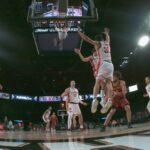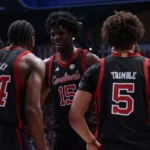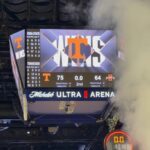

Oregon Ducks vs Maryland Terrapins men's basketball at the 2026 Players Era 16 tournament in Las Vegas
 0
 0
Andrew Meadow delivers a career-high 28 points as Oregon’s explosive second-half performance secures an 88–73 victory over Maryland and seventh place in the Michelob ULTRA Arena bracket.
By Pretty Girls Media | November 27, 2026
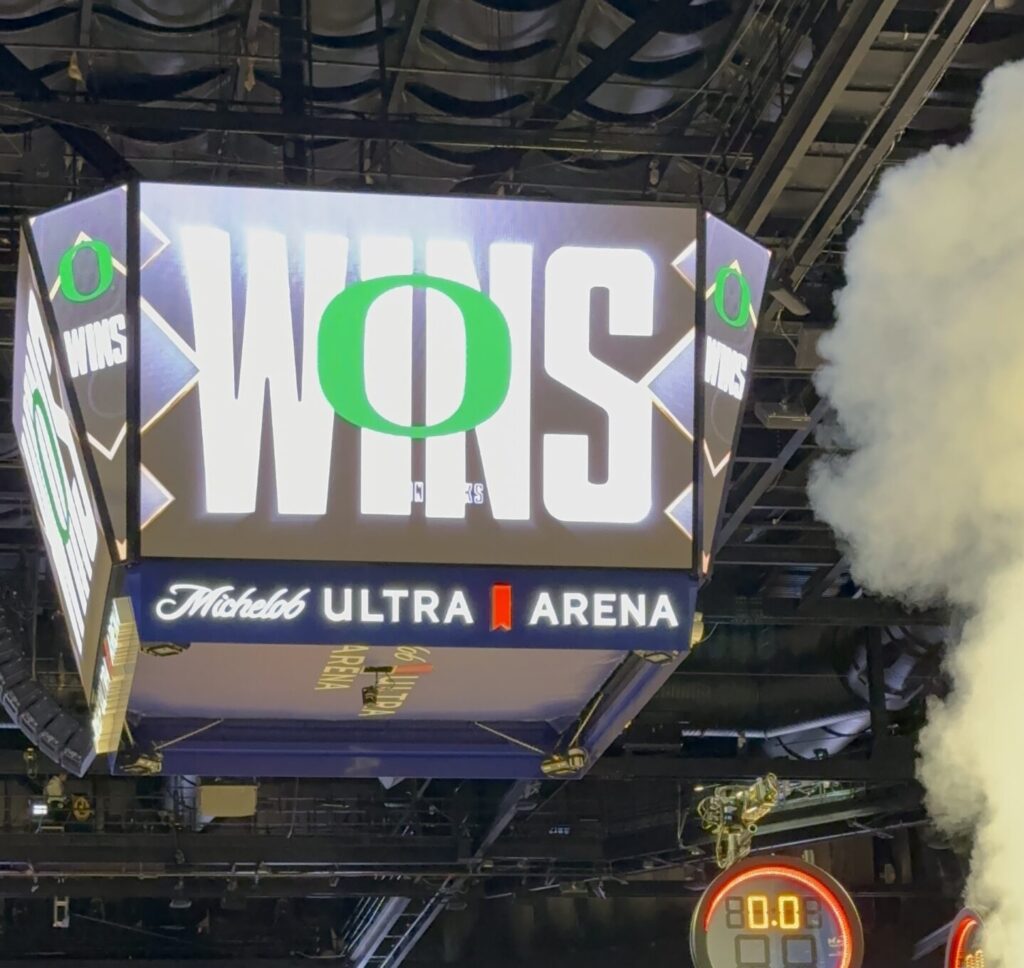
LAS VEGAS — After two unsuccessful outings at the 2026 Players Era 16 tournament, Oregon finally found its rhythm.
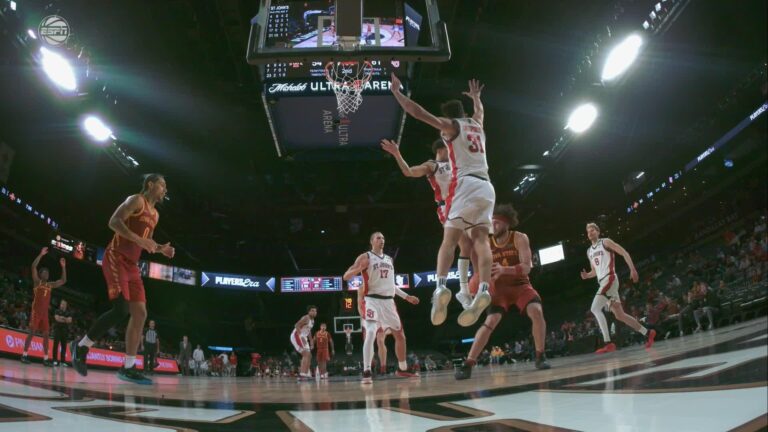
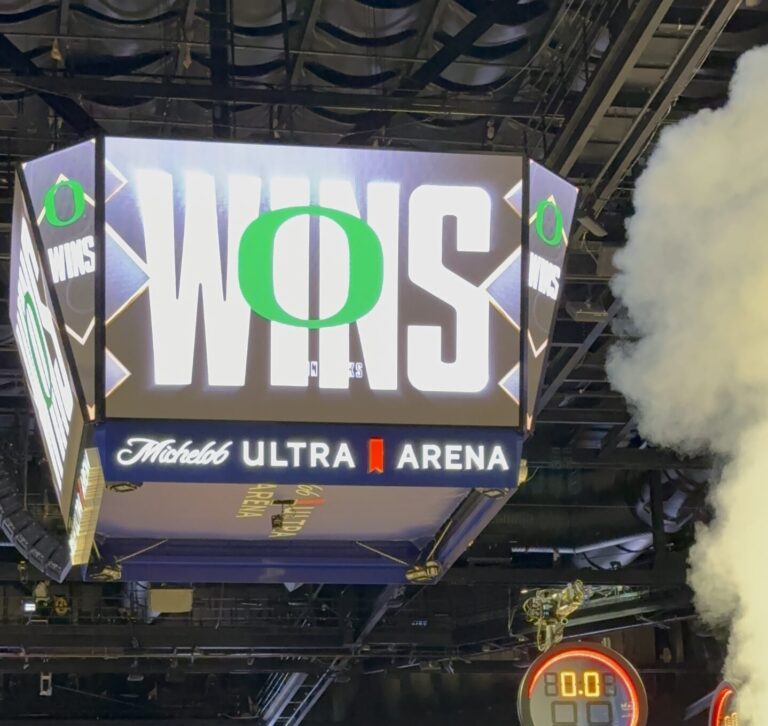
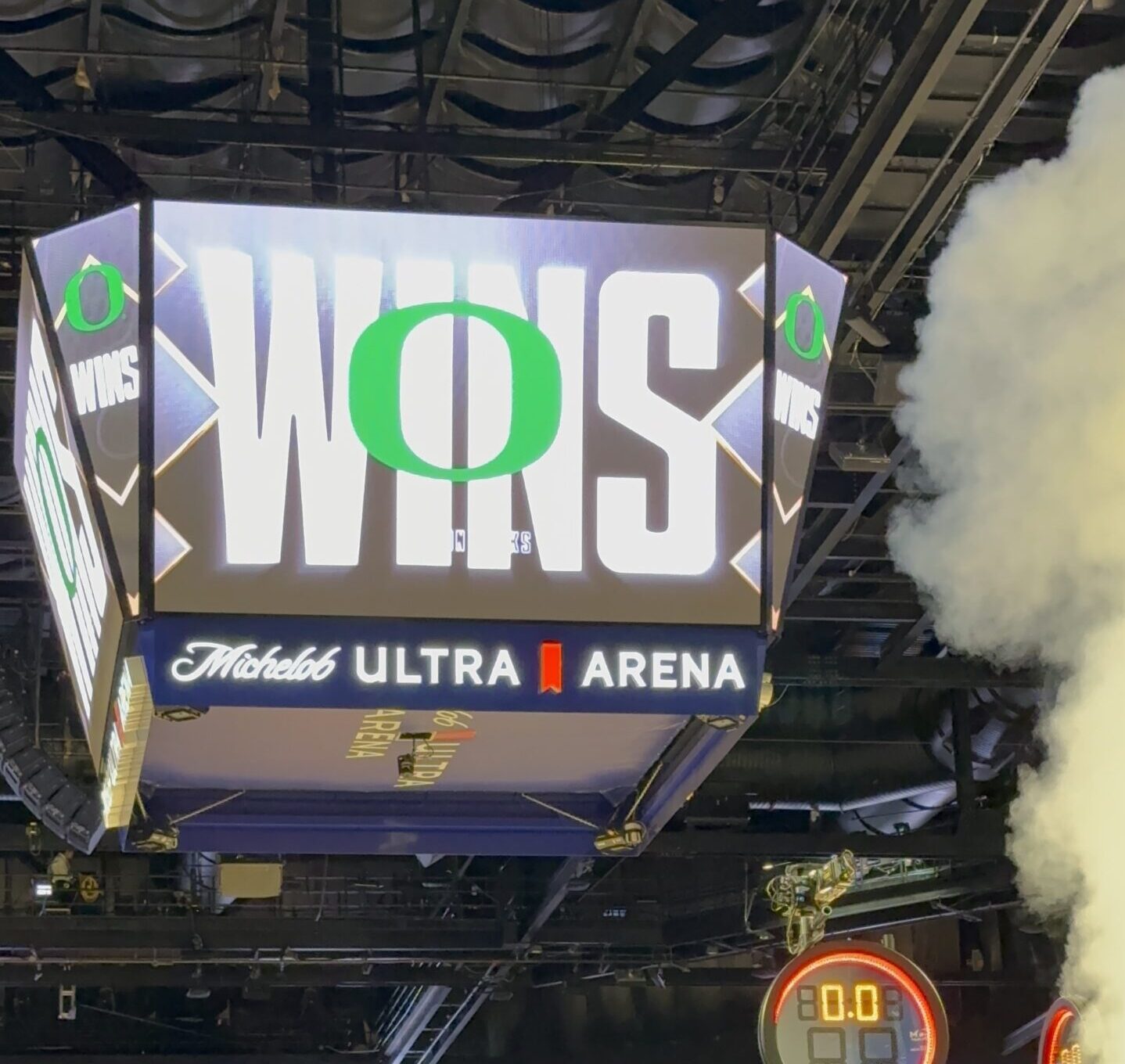
Behind a career-high 28 points from Andrew Meadow and an impressive 23-point performance from Fred Payne, the Ducks defeated Maryland 88–73 on Friday afternoon at Michelob ULTRA Arena, securing seventh place in their tournament bracket.
For Oregon, the victory was an opportunity to restore confidence following consecutive defeats against nationally ranked opponents.
For Maryland, it was another disappointing afternoon that exposed concerns surrounding defensive consistency, ball security and the ability to sustain momentum.
Both programs entered Friday searching for answers, but only one would leave Las Vegas with a victory.
Two Big Ten Programs Searching for Redemption
Oregon and Maryland entered their final Players Era 16 matchup without a tournament victory.
The Ducks opened their tournament appearance with a 90–79 defeat against No. 13 St. John’s before suffering a narrow 62–59 loss to No. 5 Texas Tech on Thanksgiving night.
Against Texas Tech, Oregon demonstrated its ability to respond to adversity, overcoming a double-digit deficit before ultimately falling short in the closing moments.
Maryland experienced similar frustrations.
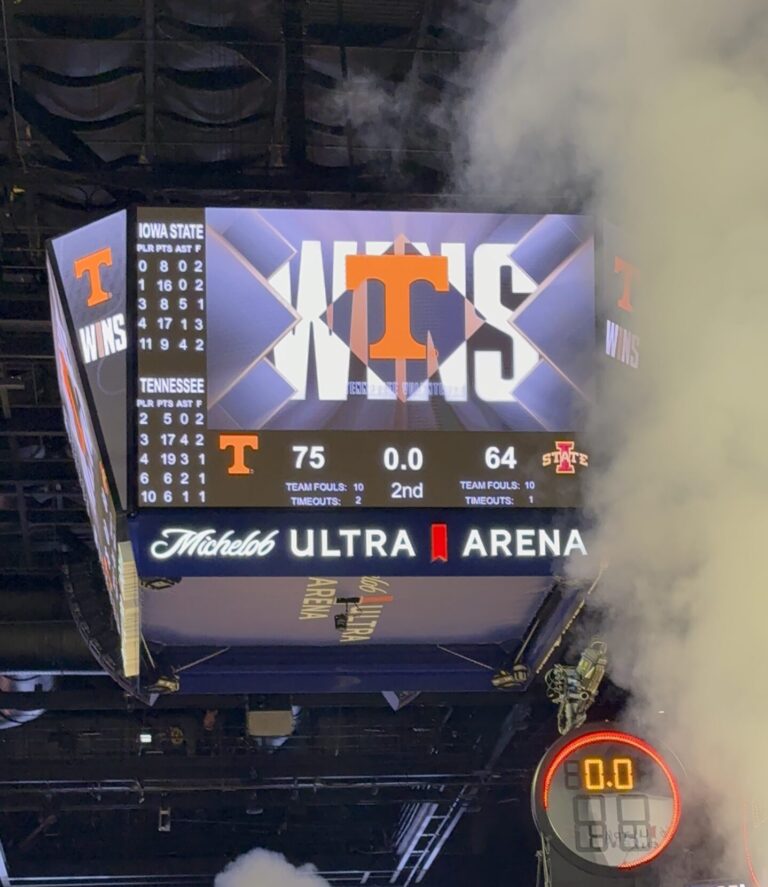
The Terrapins fell 72–64 to No. 9 Tennessee on Tuesday before surrendering a second-half advantage against San Diego State in a 75–71 defeat on Thursday.
Although both programs belong to the Big Ten, Friday’s neutral-site contest did not count toward the conference standings.
Nevertheless, the opportunity to avoid leaving Las Vegas winless carried considerable significance.
Oregon Establishes Its Perimeter Presence Early
The Ducks wasted little time getting comfortable offensively.
Jasper Johnson opened the scoring with consecutive three-pointers, immediately challenging Maryland’s perimeter defense and establishing a 6–0 advantage.
The Terrapins responded with a 10–0 run of their own, highlighted by early perimeter production from Mike McNair Jr.
Coming off a 22-point performance against San Diego State, McNair continued demonstrating his importance within Maryland’s offensive rotation.
However, Oregon quickly regained control.
The Ducks answered Maryland’s scoring run with 12 consecutive points, moving ahead 18–10 as their perimeter shooting created significant problems for the Terrapins.
Oregon converted its first five three-point attempts, eventually building a 24–17 advantage.
Maryland continued fighting to remain competitive. Kaden House capitalized on opportunities around the basket and at the free-throw line, while D.J. Wagner helped facilitate the offense.
With approximately five minutes remaining in the opening half, the Terrapins had reduced Oregon’s advantage to just one point at 26–25.
Despite Oregon’s impressive shooting efficiency from beyond the arc, Maryland remained within striking distance.
The Ducks entered halftime with a 40–35 lead.
There was still plenty of basketball left to be played, but Maryland needed to find a defensive answer for Oregon’s offensive versatility.
A 15–0 Run Changes Everything
Maryland returned from halftime with an encouraging start.
House converted a basket while drawing a foul before completing the three-point play, reducing Oregon’s advantage to 40–38.
The Terrapins were within two points and appeared positioned to challenge for control of the game.
Then everything changed.
Oregon responded with a decisive 15–0 run, extending its advantage to 55–38 and completely altering the complexion of the contest.
The Ducks increased their defensive activity, capitalized on Maryland’s mistakes and continued finding efficient scoring opportunities.
Meadow and Fred Payne became increasingly difficult to contain as Oregon attacked Maryland both from the perimeter and inside the paint.
What had been a competitive game at halftime quickly developed into a commanding Oregon performance.
Maryland attempted to respond through McNair’s perimeter shooting and Baba Oladotun’s offensive production, but the Terrapins struggled to generate the defensive stops necessary to build sustained momentum.
Oregon eventually extended its advantage to as many as 22 points.
The Ducks shot 63.6% from the field in the second half, converting 21 of their 33 attempts and outscoring Maryland 48–38 over the final 20 minutes.
For a team that had experienced offensive inconsistencies throughout its first two tournament games, Friday’s performance was a significant step in the right direction.
Andrew Meadow Delivers a Career Performance
Meadow emerged as the standout performer of Friday’s matchup.
The Oregon forward finished with a career-high 28 points, converting 12 of his 17 field-goal attempts and three of his five opportunities from beyond the arc.
His efficiency was particularly impressive.
Meadow shot 70.6% from the field without committing a turnover in 33 minutes of action.
His ability to score from multiple areas of the floor presented consistent challenges for Maryland’s defense.
Rather than depending exclusively on perimeter opportunities, Meadow demonstrated the versatility to attack inside and capitalize on openings created by Oregon’s ball movement.
His performance provided the Ducks with a reliable scoring presence throughout the contest.
However, Meadow was far from alone.
Fred Payne Provides the Perfect Complement
While Meadow led Oregon in scoring, Fred Payne delivered an equally impressive display of offensive efficiency.
Payne finished with 23 points and five assists, shooting 10-for-13 from the field and connecting on two of his three attempts from beyond the arc.
Together, Meadow and Payne combined for 51 points, accounting for nearly 58% of Oregon’s total offensive production.
Their combined shooting performance was remarkable, as the duo converted 22 of 30 field-goal attempts.
Payne also completed the game without committing a turnover, highlighting the composure and offensive discipline that separated Oregon from Maryland.
Johnson contributed another 10 points, three assists and three steals, providing additional production on both ends of the floor.
The Ducks demonstrated how dangerous their offense can become when their primary contributors are operating efficiently and sharing the basketball.
Maryland Finds Individual Bright Spots Despite the Loss
Despite the disappointing result, several Terrapins delivered encouraging individual performances.
McNair continued his impressive stretch of perimeter shooting, finishing with 15 points after connecting on five of his nine three-point attempts.
Over Maryland’s final two tournament games, McNair combined for 37 points and 10 made three-pointers.
His shooting has become an important component of Maryland’s offensive identity, particularly when the Terrapins struggle to establish consistency elsewhere.
Pharrel Payne matched McNair with 15 points while collecting nine rebounds off the bench.
Payne was particularly effective at the free-throw line, converting all 11 of his attempts.
Another encouraging development came from freshman Baba Oladotun.
Oladotun recorded a career-high 12 points in 18 minutes, reaching double figures for the first time in his collegiate career. During Maryland’s second-half efforts to reduce the deficit, he accounted for eight consecutive Terrapins points.
House also continued demonstrating his potential, finishing with 11 points and four rebounds in his first collegiate start.
It marked the seventh time this season that the freshman reached double figures.
Although Maryland was unable to secure a victory in Las Vegas, the development of its younger contributors provides something positive to build upon.
Ball Security and Defensive Pressure Separate the Ducks and Terrapins
Maryland actually finished Friday’s contest with the rebounding advantage, collecting 32 boards compared with Oregon’s 28.
The Terrapins also converted eight three-pointers, shooting a respectable 42.1% from beyond the arc.
However, Oregon’s efficiency and ability to capitalize on Maryland’s mistakes proved decisive.
The Ducks committed only six turnovers while forcing 15 from the Terrapins.
Oregon generated 21 points following Maryland turnovers, compared with just seven points generated by the Terrapins from Oregon’s mistakes.
The Ducks also recorded 22 assists on their 34 made field goals, demonstrating how effectively the offense operated as a collective unit.
Inside the paint, Oregon held a commanding 46–28 scoring advantage.
Maryland’s defensive struggles extended beyond the three-point line. The Terrapins had difficulty containing penetration, protecting the interior and recovering when Oregon created passing opportunities.
The combination of efficient shooting, disciplined offensive execution and defensive activity allowed the Ducks to control the game.
Oregon vs. Maryland: Standout Player Performances
Oregon Ducks
Andrew Meadow — 28 points, three rebounds, two assists
Delivered a career-high scoring performance while shooting 12-for-17 from the field and committing zero turnovers.
Fred Payne — 23 points, five assists, two rebounds
Shot 76.9% from the field and provided efficient scoring and playmaking without committing a turnover.
Jasper Johnson — 10 points, three assists, three steals
Established Oregon’s early perimeter presence and contributed valuable defensive production.
Taylor Bol Bowen — Nine points, two blocks, two steals
Provided efficient scoring and defensive versatility despite encountering foul trouble.
Pharaoh Compton — Four points, seven rebounds, three blocks, two steals
Contributed significantly on the defensive end and led Oregon in rebounding.
Jerry Easter II — Five assists, three steals, one point
Influenced the game as a facilitator and defender in just 13 minutes off the bench.
Maryland Terrapins
Mike McNair Jr. — 15 points, five three-pointers
Continued demonstrating his perimeter shooting ability, finishing 5-for-9 from beyond the arc.
Pharrel Payne — 15 points, nine rebounds
Finished one rebound shy of a double-double while converting all 11 free-throw attempts.
Baba Oladotun — 12 points, three rebounds, one block
Recorded a career-high scoring performance and provided an encouraging glimpse of his offensive potential.
Kaden House — 11 points, four rebounds
Reached double figures for the seventh time this season while making his first collegiate start.
D.J. Wagner — Eight points, seven assists, four steals
Provided Maryland with valuable playmaking and defensive activity.
The Numbers Behind Oregon’s Victory
| Game statistic | Oregon | Maryland |
|---|---|---|
| First-half points | 40 | 35 |
| Second-half points | 48 | 38 |
| Final score | 88 | 73 |
| Field-goal percentage | 56.7% | 46.0% |
| Three-pointers made | 8 | 8 |
| Three-point percentage | 66.7% | 42.1% |
| Free-throw percentage | 75.0% | 67.9% |
| Total rebounds | 28 | 32 |
| Assists | 22 | 13 |
| Steals | 13 | 5 |
| Blocks | 6 | 1 |
| Turnovers | 6 | 15 |
| Points in the paint | 46 | 28 |
| Points off turnovers | 21 | 7 |
| Fast-break points | 20 | 12 |
| Bench points | 18 | 33 |
| Updated season record | 4–3 | 3–5 |
The Pretty Girls Media Takeaway
Oregon’s performance against Maryland was arguably the most encouraging display of its Players Era 16 tournament appearance.
Throughout the previous two games, the Ducks demonstrated flashes of their offensive potential but struggled to maintain consistency for an entire contest.
Friday was different.
Oregon played connected basketball, shared the ball effectively and demonstrated impressive offensive discipline.
Meadow and Fred Payne were exceptional, but what stood out beyond their individual scoring was the Ducks’ ability to create quality opportunities without sacrificing ball security.
Recording 22 assists against just six turnovers is the type of offensive execution that head coach Dana Altman can build upon.
The defensive contributions from Johnson, Compton and Easter also demonstrated the value of players who can influence the game without needing to dominate the scoring column.
However, Oregon must continue improving its rebounding and maintaining consistency against stronger defensive opposition.
The Ducks’ performances against St. John’s and Texas Tech demonstrated that there is still work to be done.
For Maryland, the concerns are considerably greater.
Finishing the tournament without a victory highlights the challenges facing Buzz Williams and his staff as they continue developing this roster.
The Terrapins have demonstrated that they possess individual offensive talent. McNair’s perimeter shooting, Pharrel Payne’s interior production and the continued development of House and Oladotun provide encouraging pieces.
The issue is bringing those pieces together consistently.
Maryland cannot afford to experience extended defensive lapses or surrender additional possessions through avoidable turnovers.
Allowing Oregon to shoot 66.7% from beyond the arc and score 46 points in the paint illustrates the need for improvement across multiple defensive areas.
The talent is present, but the Terrapins must establish a more consistent collective identity before entering the demanding Big Ten conference schedule.
What’s Next for Oregon and Maryland?
Oregon concludes its Players Era 16 appearance with a 1–2 tournament record, securing seventh place in the Michelob ULTRA Arena bracket and improving to 4–3 overall.
The victory provides the Ducks with renewed confidence and a clearer understanding of what their offense can accomplish when operating efficiently.
Maryland finishes its tournament appearance 0–3, falling to 3–5 overall.
The Terrapins return to College Park to host American University on Wednesday, December 2, at 7 p.m. Eastern, presenting an opportunity to regroup and regain momentum.
For Oregon, Friday’s performance was a reminder of its potential.
For Maryland, it was a reminder of how much work remains.
The Ducks arrived at their tournament finale searching for their first victory in Las Vegas.
Behind Meadow and Fred Payne, they finally found their wings.
Follow Pretty Girls Media for continued Players Era 16 coverage, exclusive courtside content, college basketball news and postgame analysis from Las Vegas.


About the Author