
 1
1
 0
0
From Rebuild to Expectations: Kenny Dillingham’s Arizona State Sun Devil team has Entered a New Era
There is a different feeling around Arizona State football these days.
Not long ago, simply competing in the Pac-12 felt like an uphill battle. The program was navigating NCAA investigations, coaching turnover, scholarship limitations, and one of the nation’s most difficult rebuilding jobs. Mountain America Stadium still filled with loyal fans, but hope often outweighed results. Every victory felt like a step toward relevance rather than proof that Arizona State belonged among college football’s elite.
Fast forward to the summer of 2026, and the conversation has changed entirely. Nobody is asking whether Arizona State can become competitive again. Instead, the question is whether the Sun Devils can remain one of the Big 12’s premier programs.
That transformation belongs largely to one man.
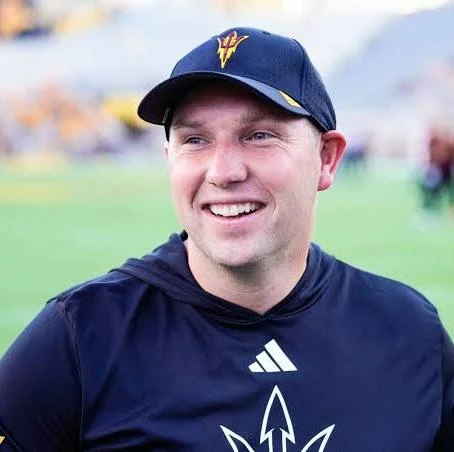
When Arizona State hired Kenny Dillingham in November 2022, the university wasn’t simply bringing home an alumnus—it was betting on a young coach whose vision extended far beyond wins and losses. Dillingham spoke openly about restoring pride to the program, reconnecting with Arizona’s high school coaches, recruiting the state aggressively, and creating a culture that players wanted to be part of rather than escape from. At the time, those ideas sounded ambitious for a program facing scholarship reductions and roster instability.
Four years later, they sound prophetic.
Dillingham has transformed Arizona State from a rebuilding project into one of the healthiest programs in the Big 12. Recruiting has improved dramatically. The transfer portal has become a weapon instead of a necessity. Development has become a hallmark of the coaching staff, and perhaps most importantly, players now see Tempe as a destination rather than a stepping stone.
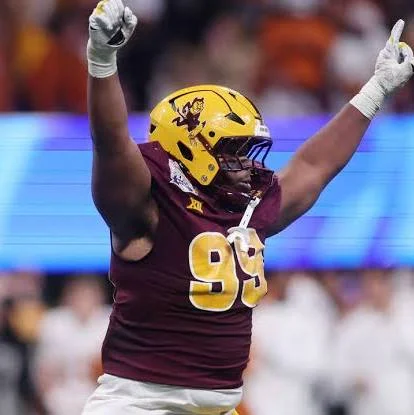
That shift has fundamentally altered the expectations surrounding the program.
In previous seasons, Arizona State embraced the role of the underdog. Every upset generated headlines because few believed the Sun Devils could consistently compete with the conference’s best. Entering 2026, that narrative no longer applies. Opponents circle Arizona State on the schedule. National analysts include the Sun Devils in preseason discussions about the Big 12 race. Success is no longer measured by bowl eligibility or incremental progress. The expectation is to contend.
Those expectations come with a unique challenge. For the first time under Dillingham, Arizona State enters a season needing to replace star power instead of simply finding it.
The departures were significant.
The offense lost quarterback Sam Leavitt to the transfer portal after helping elevate the program’s national profile. Wide receiver Jordyn Tyson departed for the NFL after developing into one of college football’s most explosive playmakers. Several experienced offensive linemen and defensive contributors also moved on, leaving behind production that cannot be replicated by one player alone.
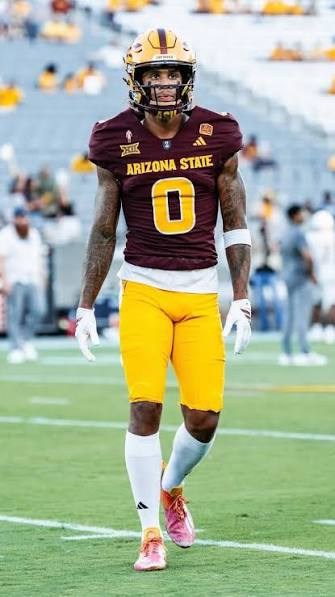
For many programs, that type of roster turnover signals the beginning of another rebuild.
Arizona State approached it differently.
Rather than searching for one superstar capable of replacing Tyson’s production or Leavitt’s leadership, the coaching staff assembled one of the conference’s most intriguing transfer classes. Wide receiver Omarion Miller arrives with the size and athleticism to become a featured target immediately. Reed Harris adds proven production and versatility to the receiver room. Linebacker Owen Long gives Brian Ward’s defense another instinctive tackler capable of anchoring the second level, while veteran additions throughout the roster provide experience without sacrificing long-term development. Dillingham was transparent throughout the offseason that the portal would complement, not replace, the program’s recruiting philosophy, and Arizona State again leaned on a blend of transfers and homegrown talent. (SI)
That approach says a great deal about where the program stands today.
Early in Dillingham’s tenure, Arizona State needed immediate contributors simply to field a competitive roster. Now, the Sun Devils are using the transfer portal to address specific needs while allowing younger players to develop within the program. That distinction separates sustainable contenders from teams that rebuild every offseason.
The identity of this year’s team reflects that evolution.
Unlike previous seasons, the 2026 Sun Devils are unlikely to rely on one transcendent offensive player. Instead, this roster appears deeper, more balanced, and more versatile across nearly every position group.
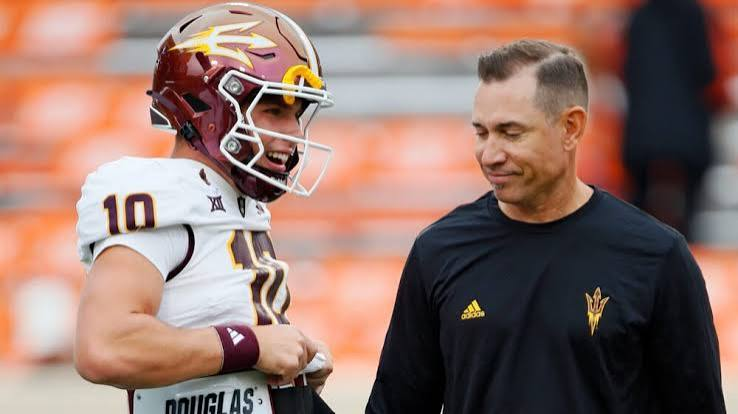
Offensively, Marcus Arroyo inherits perhaps his deepest collection of pass catchers since arriving in Tempe. Tight end could quietly become one of Arizona State’s strongest position groups, featuring veterans like Khamari Anderson alongside the enormous upside of AJ Ia. At wide receiver, Omarion Miller, Reed Harris, and several young contributors provide multiple skill sets capable of stressing defenses in different ways. While replacing Tyson’s explosiveness is unrealistic, replacing his production by committee is not.
The running game also remains central to Arizona State’s offensive identity. Dillingham has consistently emphasized physical football, efficient rushing attacks, and creating favorable situations for his quarterbacks. Regardless of whether veteran Mikey Keene or younger Cutter Boley wins the starting quarterback job, the offense is unlikely to ask its signal-caller to carry the team every Saturday. Instead, expect balance, controlled aggression, and an emphasis on limiting mistakes.
Defensively, Brian Ward once again has reason for optimism.
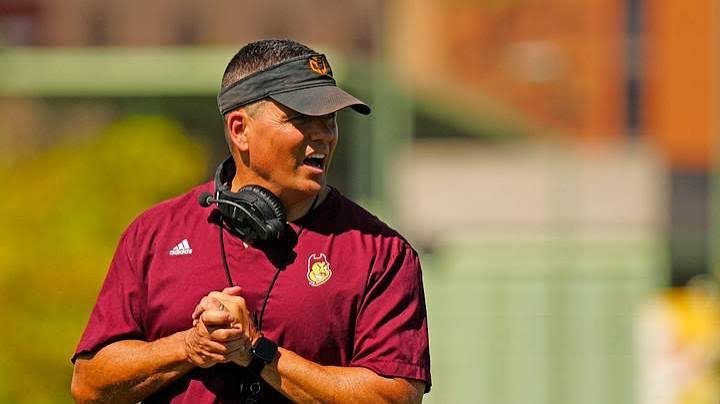
Arizona State’s defense has steadily become one of the more aggressive units in the conference under Ward’s direction. Pressure packages are creative, linebackers play downhill, and the secondary has developed into a confident, physical group capable of generating takeaways. While replacing departed veterans is never easy, the additions of experienced transfers combined with another offseason of player development should allow the Sun Devils to remain one of the conference’s better defensive teams.
Perhaps the biggest reason for optimism, however, extends beyond any individual player.
It is continuity.
For the first time in years, Arizona State enters a season with stability across the coaching staff. Dillingham, offensive coordinator Marcus Arroyo, and defensive coordinator Brian Ward all return, giving players the benefit of another offseason within the same systems. That continuity matters. Installations become refinements instead of complete overhauls. Younger players enter camp understanding expectations rather than learning entirely new terminology. The result is a roster that should begin the season further ahead than many of its conference rivals.
Still, legitimate questions remain.
Who wins the quarterback competition?
Can the offensive line replace key departures while maintaining the physicality that defined the offense?
Will someone emerge as the unquestioned No. 1 receiver?
Can Arizona State generate enough explosive plays without Tyson?
And perhaps the biggest question of all: can this roster handle one of the most demanding schedules of the Dillingham era? National previews have consistently identified Arizona State’s 2026 slate as significantly more challenging than recent seasons, with multiple road tests likely to determine the Sun Devils’ conference championship aspirations.
Those questions are exactly what separate good teams from championship contenders. The encouraging news for Arizona State is that none of them stem from a lack of talent.
Instead, they revolve around chemistry, experience, and replacing proven production with emerging stars. That is an entirely different conversation than the one surrounding the program just a few years ago.
For Kenny Dillingham, that may be the greatest accomplishment of all. Arizona State is no longer trying to convince the college football world that it belongs. The Sun Devils have already done that.
Now comes the difficult part: proving that last season’s success was not the peak of the rebuild, but the foundation of something much bigger.
The expectations in Tempe have changed.
And for the first time in a long time, that is exactly where Arizona State wants them to be.


About the Author