#image_title
 0
0
 0
0
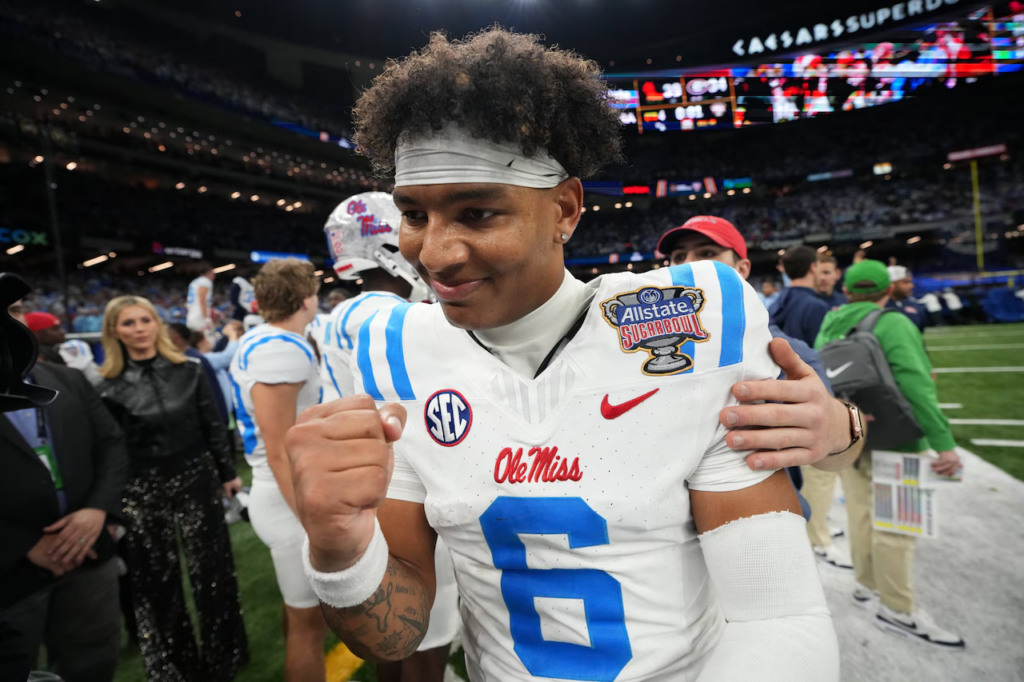
The court ruling granting Ole Miss quarterback Trinidad Chambliss a temporary injunction to play in 2026 immediately reframed his future. What once looked like a forced decision — enter the 2026 NFL Draft or accept the end of his college eligibility — is now a strategic crossroads.
But more choice does not always mean a better outcome. For Chambliss, this ruling restores control over his timeline. The real question is whether using that extra year will elevate his professional ceiling — or quietly compress it.
Repercussions: Stability, Leverage, and Hidden Risk for Chambliss
In the short term, the benefits are obvious. Ole Miss retains an experienced starting quarterback. Chambliss gains another season of SEC film. His NIL value remains intact. Most importantly, he regains leverage.
Quarterbacks develop through repetition, command, and exposure to complex defenses. An additional year running an offense can sharpen processing speed, improve pocket discipline, and refine anticipation throws — traits that matter far more to NFL evaluators than raw athleticism alone. Yet the injunction is temporary. The broader legal case continues. And even if he plays the 2026 season uninterrupted, the larger risk is not legal — it is comparative.
Because draft decisions are never made in isolation. They are made relative to the class surrounding you.
The Real Question for Chambliss: 2026 or 2027?
If Chambliss were to enter the 2026 NFL Draft, he would do so in a quarterback class currently headlined by Fernando Mendoza, Ty Simpson, Garrett Nussmeier, and Carson Beck. That group is talented but not considered generational. There is no overwhelming consensus top tier that buries the rest of the field.
In that environment, Chambliss has a clear pathway. With another productive season, he could realistically position himself in the upper half of the class — potentially QB3 or QB4 depending on performance and team needs. That kind of standing often translates to Day 2 draft capital, and in the right scenario, even late first-round conversation if momentum builds.
The 2026 class presents competition.
The 2027 class presents congestion.
Looking ahead, the projected 2027 quarterback group includes Dante Moore, Arch Manning, LaNorris Sellers, Julian Sayin, and DJ Lagway. That is not merely depth — that is high-end pedigree, elite recruiting profiles, advanced arm talent, and long-term projection. Several of those names have been viewed as future first-round picks since high school.
NFL teams draft quarterbacks based on traits and ceiling as much as production. In a class loaded with elite physical upside and developmental runway, a player who projects as “very good” rather than “rare” can get squeezed down the board.
That is where the risk becomes tangible. Even if Chambliss improves in 2026 — better footwork, higher completion rate under pressure, more command at the line of scrimmage — he could still enter 2027 as QB6 or QB7 simply because of who surrounds him.
And quarterback draft positioning is highly tiered. The difference between QB3 and QB7 is not cosmetic. It can mean multiple rounds of separation, millions in guaranteed money, and a drastically different level of organizational commitment. Teams invest differently in quarterbacks taken in the top 40 versus those selected on Day 3. The upside of waiting until 2027 is incremental refinement. The downside is market compression.
Unless Chambliss believes he can make a genuine leap — not steady growth, but a leap that forces evaluators to place him in the same tier as Manning, Lagway, Moore, or Sayin — the move becomes high risk for potentially limited additional reward.
Development vs. Exposure
There is another layer to this decision: exposure risk.
Quarterbacks benefit from reps. But they also accumulate tape. Defensive coordinators adjust. Weaknesses become more documented. Injury risk increases. Age relative to class peers shifts. Declaring in 2026 would allow Chambliss to enter the league younger and begin NFL-specific development sooner. Remaining until 2027 means he must clearly separate himself, not merely sustain production.
History shows that additional college seasons can either elevate a quarterback into the first round — or flatten perception if evaluators believe the ceiling has already been revealed.
Is This Good for His Future?
The court ruling is good for his leverage. Whether it is good for his draft future depends entirely on execution and self-awareness.
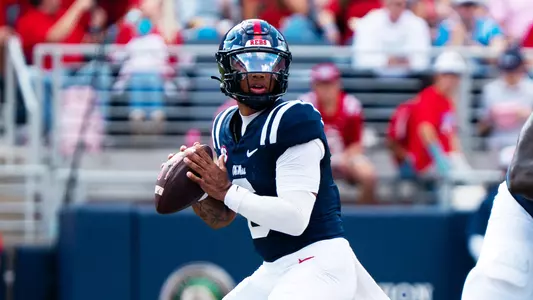
The 2026 draft window appears navigable. The 2027 landscape appears crowded at the top. From a pure market perspective, maximizing position within a manageable class may be more strategic than entering a deeper, more talented one. Sometimes the smartest decision is not maximizing theoretical upside. It is maximizing position within the market you are entering.
Chambliss now controls his timing. But timing, in quarterback economics, can either amplify value — or dilute it. The extra year is not automatically a gift; it is a calculated gamble. And the margin for error just became smaller.


About the Author