
#image_title
 0
0
 0
0
San Diego State and Utah State have validated their top billing, but a turbulent first half of Mountain West play has reshuffled expectations and opened the door for surprises in March. The path for each team has changed dramatically, as have expectations. That said, the metrics are clear thus far. We have Contenders, Pretenders, and Dark Horse Hopefuls!
Biggest Mountain West bust so far
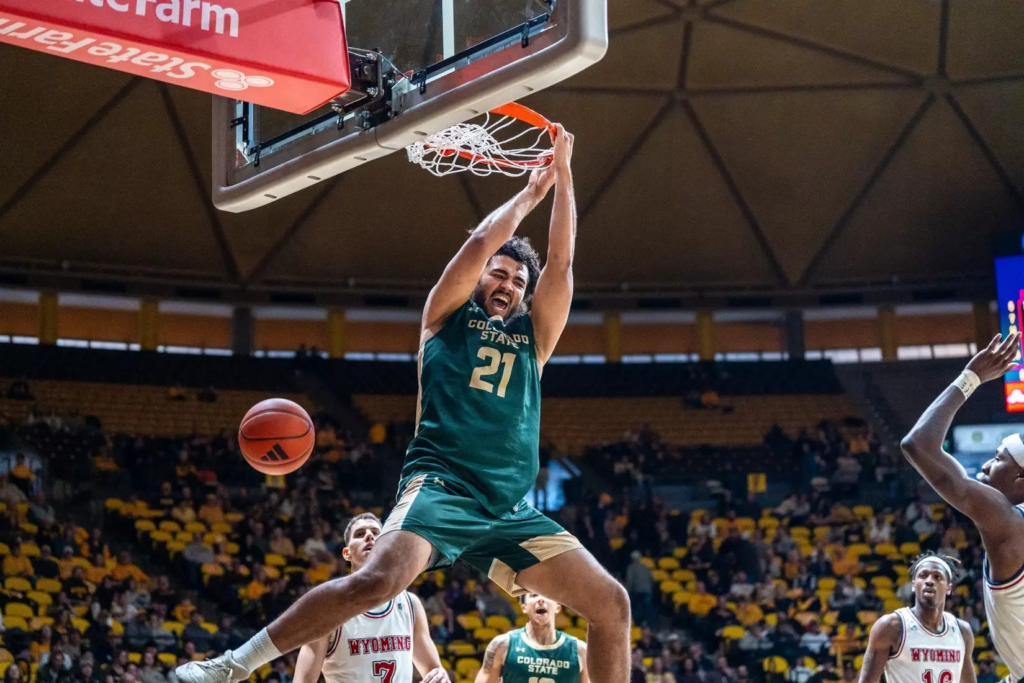
Colorado State enters the midpoint as the league’s biggest bust, slipping to the bottom tier of the standings despite a preseason profile that suggested it would be a comfortable NCAA at‑large contender. Their conference efficiency margin has cratered into the red, and both their offense and defense sit in the lower half of the league tables, a stark contrast to last season’s balance and experience. Turnover rate and defensive rebounding have been particular issues, costing them late in close games and turning what should have been a top‑four résumé into one fighting just to stay out of the Wednesday games in the conference tournament.
UNLV also belongs in the Mountain West disappointment discussion, sitting in the middle of the pack with only a slight positive efficiency margin despite the talent on the roster and an offense that grades out merely average in conference‑only numbers. Given their home‑court advantage and transfer‑heavy roster, the Rebels were expected to push for the top three, but their defense has leaked efficient shots at the rim and from three, leaving them with little margin for error in the stretch run.
Hottest team at midseason
New Mexico owns the league’s most impressive current arc, pairing a top‑two offense with the Mountain West conference’s stingiest defense in league play to surge into the title race. Their conference‑only defensive efficiency sits atop the Mountain West chart, fueled by elite effective field‑goal defense and strong block and steal rates that generate transition chances for an already explosive attack. On the other end, the Lobos rank near the top of the league in free‑throw rate and two‑point percentage, creating a steady stream of efficient points even on nights when perimeter shots waver.
The combo of Deyton Albury + the trio of Freshman in Jake Hall, Tomislav Buljan, and Urijah Tennette has proven to be what many more thought and then some. The Lobos are averaging 81.1 ppg, and those four combine for about 61% of the scoring while averaging just 25.5 minutes per game.
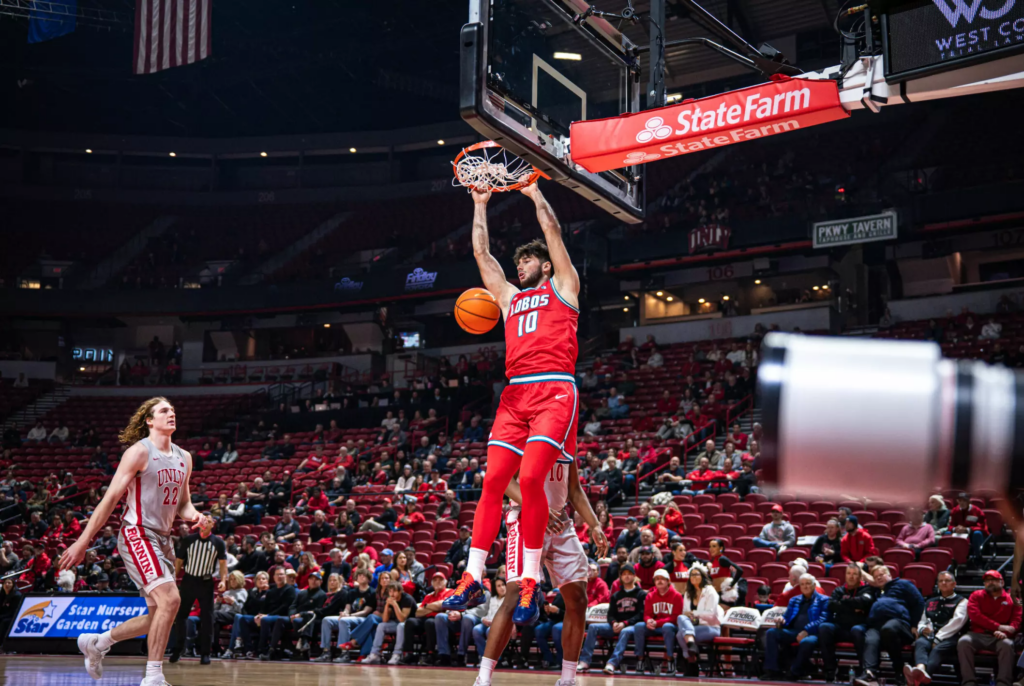
Courtesy UNM Athletics
Utah State deserves mention as well: the Aggies boast the Mountain West’s best offensive efficiency in conference games and dominate the glass on both ends, giving them a multi‑game win streak and a point‑differential profile more typical of a ranked team than a bubble group. Their combination of shooting, cutting, and ball security has produced the league’s most efficient effective field‑goal mark and one of its lowest turnover rates, making them a nightmare to chase from behind.
Dark horse to win the Mountain West tournament
Grand Canyon stands out as the true dark horse, carrying a top‑four efficiency margin in league play and a defense that ranks among the conference’s best despite sitting just behind the headline contenders in the standings. Their conference‑only defense grades in the upper tier in effective field‑goal defense, block rate, and steal rate, the exact profile of a team that can string together three straight stop-heavy wins in Las Vegas. Offensively, they get to the line at a strong rate and crash the offensive glass well enough that even cold shooting nights can be rescued by second‑chance points and free throws.
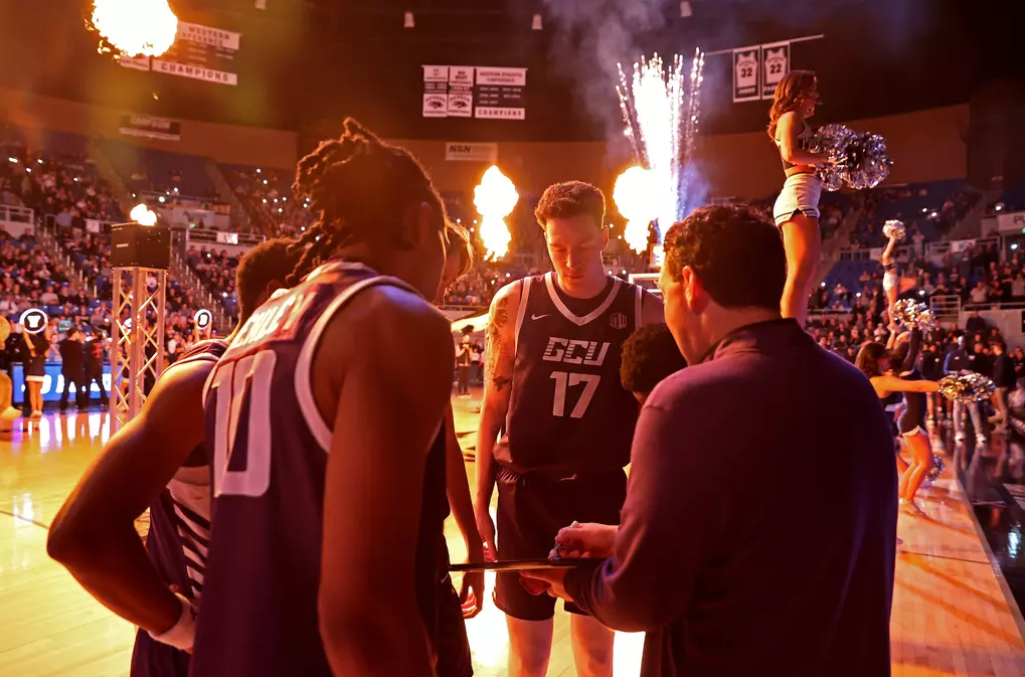
If Grand Canyon tightens its turnover issues and finds a reliable third scorer, likely Freshman Phenom Efe Demirel, its blend of physical defense and high‑leverage shot creation gives it a legitimate path to cutting down the nets in March.
Mountain West Team‑by‑team expectations
San Diego State
San Diego State remains the standard bearer, with the league’s best overall efficiency margin, a top‑flight defense, and a projected conference record that keeps them on track for both a regular‑season title and a protected NCAA seed. Expect the Aztecs to lean on their elite rim protection and top‑tier defensive rebounding to grind out low‑possession wins, with the main question being whether their offense can stay above water on the road against the league’s better defenses.
New Mexico
The Lobos should continue to climb metrics and likely finish in the top two, with a realistic shot at stealing the regular‑season crown if their defense maintains its current No. 1 status in league play. Their aggressive style does create foul‑trouble risk, but their depth and ability to manufacture free throws and transition buckets make them a nightmare tournament matchup and a strong candidate for an at‑large bid regardless of what happens in the title game.
Utah State
Utah State’s shooting and offensive execution should keep them in every game, and their current conference‑only offensive efficiency edge suggests a finish firmly in the top four and a double‑bye in the tournament bracket. If their defense can stay in the middle of the pack rather than slipping toward the bottom, the Aggies have enough firepower to win the league outright or roll through a three‑day tournament run.
Grand Canyon
Grand Canyon projects as a top‑half finisher with room to climb if its defense holds its current top‑three conference‑only ranking and the offense continues to generate free throws and second‑chance points. Expect them to enter the tournament as a dangerous 3‑to‑5 seed nobody wants to see, fully capable of knocking off one of the co‑favorites behind a hot shooting night and a whistle‑heavy game that rewards their physical style.
UNLV
UNLV likely hovers around the middle seeds, with the statistical gap between their offensive talent and their lagging defensive metrics keeping them outside the truly elite tier for now. The Rebels’ path forward is clear: clean up defensive rotations, limit fouls, and find more consistency guarding the arc, and they become the kind of volatile team that can either bow out on Thursday or play their way into Championship Saturday.
Boise State
Boise State sits in the solid but unspectacular tier, with conference‑only numbers that are roughly average on both ends and a projected record that places them safely in the middle of the pack. If they can nudge their three‑point shooting and offensive rebounding up even slightly, they have the veteran guard play and half‑court defense to steal a top‑four seed; if not, they project as a classic Friday‑night spoiler rather than a title favorite.
Colorado State
Given their current efficiency profile, Colorado State’s ceiling the rest of the way looks more like climbing back to respectability than mounting a serious title charge, with a realistic target of finishing in the middle of the league and avoiding the Wednesday games. To get there, they must shore up the defensive glass and cut down on empty possessions created by turnovers, trying to lean into their still‑solid shooting numbers to win high‑scoring games.
Wyoming
Wyoming’s conference‑only numbers suggest a lower‑middle finish, with an offense that struggles to generate efficient looks and a defense that allows one of the league’s higher effective field‑goal percentages. Expectations should center on incremental improvement—stealing a couple of home upsets, tightening rotations around their best creators, and positioning themselves as a feisty underdog in the first round of the tournament.
Fresno State
Fresno State profiles as a defense‑first group that still sits toward the bottom of the standings, and unless their offense leaps, it is hard to see them escaping the bottom third of the league. Their best‑case scenario is to turn games into rock fights, banking on physical defense and pace control to drag a higher seed into a low‑scoring quarterfinal upset in Las Vegas.
San Jose State
San Jose State’s metrics put them firmly near the basement, with one of the worst defensive efficiency marks in conference play and an offense that cannot shoot well enough to compensate. Expectations should be modest: focus on development, emphasize competitiveness at home, and hope to play spoiler once or twice against teams resting banged‑up starters late in the schedule.
Nevada
Nevada’s strong offensive profile and middle‑of‑the‑pack defense point toward a top‑five finish and a realistic shot at an NCAA bid if they avoid bad losses down the stretch. Their late‑game guard play and free‑throw rate make them particularly dangerous in tight tournament settings, which is why they hover just behind Grand Canyon in the dark‑horse tier for the MWC title.
Air Force
Air Force sits at the bottom in both record and efficiency, with conference‑only numbers that trail the field on offense and defense, especially in size‑dependent stats like rebounding and rim protection. The realistic expectation is continued growing pains, but their slow tempo and unique offensive system will give at least one higher seed headaches in a quarterfinal grind that stays close longer than expected.


About the Author